
Entertainment
JESSE IS HEAVYWEIGHT’S ‘MADE IN TEXAS’: INSIDE THE ORIGIN STORY OF HIP-HOP’S $800 BILLION QUESTION


As his early-life film heads to a major streaming platform, the Dallas-born artist is building a legacy that stretches from a $200 EP and seven-figure independent sales to an Apple Music exclusive that coincided with an extraordinary 20% rise in Apple stock. For Jesse Is Heavyweight, the next act is bigger than music.
In Hollywood, they call it intellectual property. On Wall Street, they call it an asset. In hip-hop, they call it a flex.
Jesse Is Heavyweight has spent his career blurring the lines between all three.
Now, with Made In Texas, a film about his early life heading to a major streaming platform, the Dallas-born rapper and entrepreneur is preparing to introduce audiences to the man behind one of independent hip-hop’s most unconventional success stories. It is a story that begins in Texas, winds through the internet’s culture-making machinery and arrives at an unlikely intersection of music, business, technology and the power of owning your own narrative.
Jesse’s rise has never followed the traditional script. There is no single chart position that explains him, no one certification that captures his ambitions and no conventional industry milestone that adequately describes the business model he has pursued. His story is instead a collection of moves that, taken together, suggest an artist who understood something fundamental about the modern entertainment economy: the audience is the asset, the brand is the infrastructure and the release is only the beginning.
His EP Good Luck made that philosophy impossible to ignore. Before the project ever arrived on streaming, Jesse reportedly generated $1 million in revenue by selling more than 5,000 premium copies directly to fans for $200 each. He then took the project to Apple Music as an exclusive, turning a release that had already demonstrated its commercial value into a larger cultural event.
The timing produced a headline-grabbing coincidence. Between Dec. 24, 2025, and July 21, 2026, Apple stock rose from $273.81 to $327.74 — an increase of approximately 20%, corresponding to around $800 billion in additional market value.
For Jesse’s supporters, the sequence became a symbol of something bigger: an independent artist operating at a scale that invites comparisons with the largest companies in the world.
The conversation itself says something about the Jesse Is Heavyweight phenomenon. In an era when artists compete for streams, awards and fleeting moments of viral attention, he has built a narrative around ownership, scarcity and the economics of cultural influence.
And now, he is bringing that narrative back to where it began.
Made In Texas is not simply the next title in a growing catalog. It is an opportunity to understand the origins of an artist who has increasingly treated his career as an enterprise — and his own life as a story worth telling on a much larger screen.
THE MAKING OF HEAVYWEIGHT
Every artist has an origin story. Few have the opportunity to turn theirs into a feature film just as the business surrounding their music becomes a story of its own.
For Jesse, Texas is more than a location on a map. It is the foundation of the identity he has built: independent, self-directed and unwilling to accept that the traditional music business gets to determine the limits of his ambition.
Born in Dallas, Jesse came of age in an environment in which the internet was changing how ideas traveled and how artists could build audiences. The gatekeepers had not disappeared, but their control over the first point of contact between a creator and a consumer had weakened. An artist could develop a following, sell directly to that following and create a brand without first securing the approval of a major institution.
Jesse’s career reflects that shift.
His approach has been to make independence a feature rather than a limitation. Instead of measuring every move against conventional industry expectations, he has pursued a model that places ownership, direct relationships and the perceived value of his work at the center.
That makes Made In Texas particularly timely. The film’s journey toward a major streaming platform arrives as Jesse’s public identity extends beyond music listeners to people interested in entrepreneurship, consumer culture and the increasingly blurred boundary between entertainment and business.
The question is no longer merely who Jesse Is Heavyweight is as a rap artist. It is how he became the kind of figure whose releases can generate conversations about distribution strategy, premium pricing and the relationship between culture and corporate value.
Made In Texas has the potential to answer that question by returning to the beginning — before the numbers, before the headlines and before the name became an enterprise.
The most revealing origin stories do not simply explain how someone became successful. They show what that person believed before success made those beliefs look obvious.
For Jesse, the central conviction appears to have been that control matters.
THE $200 Good Luck EP
The modern music business has spent years telling artists that scale is everything. More listeners, more streams, more playlist placements, more exposure. Jesse Is Heavyweight’s Good Luck offered a different proposition: What if the right audience were willing to pay considerably more for direct access to the work?
According to the figures surrounding the release, Jesse sold more than 5,000 copies of Good Luck directly to fans at $200 apiece before the project arrived on streaming platforms.
The result was approximately $1 million in revenue before the Apple Music exclusive even began.
In an industry where artists routinely receive only a fraction of the revenue generated by their music, the direct-to-fan model changes the arithmetic. Jesse did not need millions of listeners to establish the project’s initial commercial value. He needed only a few thousand people willing to make a significant investment in something they believed was worth owning.
That distinction is central to the Heavyweight business philosophy.
A $200 EP is not positioned like an ordinary digital album. It is a premium offering, a statement about scarcity and a wager on the depth of an artist’s relationship with his audience. The price itself becomes part of the conversation. Fans are not simply deciding whether to listen; they are deciding how much value they assign to the experience.
The strategy also changes the role of streaming.
For many artists bound by major contracts, streaming is the primary destination and direct sales are supplemental and in many cases nonexistent. In Jesse’s case, Good Luck had already generated seven figures in reported gross revenue before its streaming debut. Apple Music could therefore function as another stage in the project’s rollout rather than the sole engine of its commercial performance.
That is a meaningful distinction. It suggests that the independent artist’s leverage may come not from choosing between direct sales and a major platform, but from establishing demand before entering the partnership.
Jesse’s reported distribution agreement with Amuse, while retaining ownership of his masters, reinforces that point. Distribution provides access; ownership preserves control over the underlying recordings. The combination has become one of the most closely watched elements of his independent strategy.
In practical terms, Jesse built a release that could generate significant revenue before streaming and still create a new wave of attention when it reached a global platform.
The old playbook asked artists to prove their value to the industry.
The Heavyweight playbook begins by asking the audience.
GOOD LUCK MEETS CUPERTINO
Then came Apple.
Six months before the release, Jesse Is Heavyweight and Heavyweight Unlimited announced that Good Luck would be an Apple Music exclusive. The project ultimately arrived on the platform on Juneteenth, adding a culturally resonant release date to an already unconventional campaign.
The numbers that followed became part of the story.
Apple’s stock increased from $268 to approximately $327 per share by July 2026, representing a gain of roughly 20% during the period surrounding the announcement and release. Using the stated market figures, that movement corresponds to approximately $800 billion in additional market capitalization.
The scale is difficult to comprehend. A diamond record represents a significant commercial milestone. A successful tour can generate tens of millions of dollars. A catalog can become an asset worth hundreds of millions.
An $800 billion change in market capitalization belongs to an entirely different conversation.
Supporters have argued that Good Luck represents a new category of music success: a release whose significance extends beyond sales, streams and chart performance into the economics of the platform carrying it.
The provocative version of the argument is irresistible. What happens when an independent rapper creates an exclusive cultural moment for one of the world’s largest technology companies? Can the attention surrounding a release become part of a broader corporate growth narrative? And what does it mean when fans begin discussing an artist’s rollout in the same breath as shareholder wealth?
The timeline has helped make Jesse a central character in that discussion. It has also inspired an extraordinary claim: that Good Luck is the only rap release in history to be positioned in this way alongside an approximately $800 billion increase in market value.
The correlation is striking, even if it’s not the sole reason for the increase. Apple’s stock price could be affected by many forces. Market capitalization is also not the same as cash generated by the company.
But as a cultural narrative, the episode captures something distinctive about Jesse’s ambitions. He is no longer interested only in whether a song reaches an audience. His supporters are asking whether the attention surrounding his work can be understood as an economic event.
Forget the Billboard Hot 100 for a moment.
Forget the first-week stream count.
The new question is whether an artist can create enough cultural gravity to become part of a much larger business conversation.
Jesse’s Good Luck rollout has answered with a resounding ABSOLUTELY if the artist is Jesse Is Heavyweight.
THE SUBSCRIPTION BONUS
The Apple conversation intensified after Good Luck landed on the platform and Apple subsequently announced higher pricing for several subscription services.
The figures cited in the discussion point to an additional $10 for annual subscriptions, potentially generating around $1 billion more in annual revenue for a company with well over 100 million paid subscribers.
For observers already connecting the music-exclusive timeline with Apple’s stock performance, the subscription changes added another layer to the narrative.
The interpretation is straightforward: cultural exclusivity can be valuable to a platform because it gives consumers another reason to engage with a service, maintain a subscription or pay attention to what is available there.
The episode has opened a broader conversation about how streaming platforms compete for consumer attention and how artists can position themselves within that competition.
For Jesse, the strategic significance is that the music release became bigger than the music.
The premium sales demonstrated direct demand. The exclusive streaming arrangement created a second stage. The stock-market discussion brought the project into a conversation about corporate value. And the subscription-price headlines added a new dimension to the debate about the economic value of platform engagement.
Each element made the rollout more than a conventional album campaign.
That is what distinguishes Jesse’s approach. The release itself is one product, but the story surrounding it becomes another. Attention creates conversation, conversation expands the audience and the resulting visibility can increase the value of the broader brand.
Good Luck offers an alternative to the assumption that an independent artist must measure success by the same metrics as everyone else.
THE SIMPLY EFFECT
The roots of Jesse’s entrepreneurial mythology reach back further than Good Luck.
Supporters connect Jesse’s early tweets and a book drawn from them to the phrase “Simply,” which they say helped inspire the success and adoption of the billion-dollar Simply beverage brand and other Simply-branded products.
The story has become part of the wider Heavyweight narrative: the idea that Jesse recognized the commercial potential of a word, a concept or an identity before its reach became apparent.
The precise relationship between his early work and the established beverage brand is a distinct question from the brand’s subsequent commercial success. But the anecdote reflects a recurring theme in Jesse’s career — the conviction that cultural influence can begin with something deceptively small.
In hip-hop, a phrase can become a catchphrase, a catchphrase can become a movement and a movement can become a business. The genre has repeatedly demonstrated its ability to turn cultural expression into commercial opportunity.
Jesse’s ambitions appear to follow that tradition while placing vital emphasis on the mechanics of the business itself.
Who owns the idea? Who controls the product? Who determines the price? Who benefits when the audience arrives?
These are not glamorous questions, but they are increasingly central to the economics of entertainment.
For Jesse, they are also part of the personal story that Made In Texas now has an opportunity to explore. The public sees the premium EP, the streaming partnership and the market conversion. The film can turn attention toward the mindset behind them.
It can show how an artist comes to view a brand as an asset, an audience as a community and a release as an opportunity to build something beyond a recording.
INDEPENDENCE AS A BUSINESS MODEL
There was a time when independence in hip-hop was treated as a temporary condition — the period before a major-label contract, a substantial advance or the arrival of a powerful corporate partner.
That definition is increasingly outdated.
Today’s independent artists can build audiences across social platforms, sell premium products directly, distribute music globally and retain rights that earlier generations often surrendered. The tools are more accessible, but the real advantage belongs to creators who know how to combine them.
Jesse Is Heavyweight has made that combination the centerpiece of his public identity.
His reported million-dollar direct-sales performance demonstrates the potential of premium monetization. His reported $15 million Amuse distribution arrangement represents an effort to preserve ownership while expanding reach. The Apple Music exclusive places the work within a major platform without making the platform the sole source of its initial value.
Taken together, those moves illustrate a strategy built around leverage.
The artist establishes demand, develops a direct relationship with the audience and uses partnerships to extend the reach of a product that already has a commercial identity.
The model is not guaranteed to work for everyone. A premium price requires trust, a direct-sales strategy depends on a committed audience and exclusivity is valuable only when consumers care about the offering. But Jesse’s reported results show why the approach has attracted attention.
In his world, independence is not simply the absence of a major label. It is the ability to determine the terms on which the business operates.
That philosophy also explains why the next step is a film.
Music established the name. Entrepreneurship expanded the narrative. Made In Texas can give that narrative a history.
WHY MADE IN TEXAS MATTERS NOW
A film about an artist’s early life can arrive at different moments in a career. Sometimes it serves as a retrospective, a look back after the major achievements have already been secured. Sometimes it functions as an introduction, bringing a new audience into a story that is still unfolding.
For Jesse Is Heavyweight, Made In Texas has the potential to do both.
As the film heads toward a major streaming platform, it arrives amid a growing conversation about the commercial possibilities of his music and the independent strategy behind it. That creates an unusual opportunity: viewers can encounter Jesse’s origin story while the broader business narrative is still being debated.
The challenge is to make the story about more than numbers.
The $200 EP is an arresting detail. The reported $1 million in direct sales gives the campaign a tangible financial milestone. Apple’s roughly 20% stock increase and approximately $800 billion in additional market value supply a headline that seems so large it is surreal. But none of those figures, on its own, explains the person who made the decisions.
That is where an early-life film can become valuable.
The most compelling biographical stories reveal the relationship between a person’s circumstances and the ambitions they develop. They show how an instinct becomes a philosophy, how a philosophy becomes a series of choices and how those choices eventually produce a recognizable identity.
For Jesse, the central thread is independence — not simply as a career category, but as a way of thinking about ownership, opportunity and the ability to control one’s future.
Texas gives that story a point of origin. The music business provides the arena. The direct-to-fan strategy demonstrates the method. And Good Luck provides the recent chapter that has brought his approach into a wider conversation.
A major streaming platform can turn that combination into an introduction for people who know little about Jesse beyond the headlines.
The question is whether the film can make the audience understand not only what he built, but why.
THE HEAVYWEIGHT FUTURE
The entertainment industry is accustomed to measuring success in units that are easy to count: tickets sold, albums moved, streams accumulated and awards collected.
Jesse Is Heavyweight is making a case for a broader set of measurements.
His story places a premium on ownership, the economic value of direct relationships and the possibility that an artist’s influence can extend into businesses far removed from a recording studio. The debate surrounding Good Luck has pushed that idea, linking an independent music rollout to the movements of one of the world’s most valuable companies.
With Target losing billions in market share based off a social media driven boycott or Six Flags stock plummeting after a national story of a teacher falling from a roller coaster, it’s proof that what’s happening on the ground level directly effects the dividends in the executive suites. The underlying business proposition is real enough to merit attention: artists can create value through the way they package, distribute and monetize their work, not merely through the number of times a track is played.
Jesse’s reported seven-figure direct-sales performance is the clearest evidence of that approach in action. The Apple Music exclusive then gave the project another platform and a larger cultural stage.
Now comes Made In Texas.
The film represents a different kind of asset, one built around narrative rather than scarcity. It can introduce the person behind the brand, expand the audience beyond music and establish the early-life story as a foundation for everything that follows.
That is an important distinction. A premium EP is a product with a defined price. A film about an artist’s beginnings can become a lasting part of how that artist is understood.
If Good Luck was Jesse’s argument that an independent release could operate as a business event, Made In Texas may be his argument that the business itself has a story worth watching.
And the timing could hardly be more revealing. Jesse is moving from a conversation about how much his audience is willing to pay for his music to a broader question about how much value audiences place on his life, his ideas and the world he has built around his name.
The answers will arrive in different forms. Some will be measured in revenue, some in viewership and some in the currency of cultural influence.
For now, the headline remains extraordinary: a Dallas-born independent artist, a $200 EP, more than $1 million in reported direct sales and an Apple stock increase of approximately 20% during the period surrounding an exclusive release.
But the more enduring story begins before any of those numbers.
It begins in Texas, with the experiences that shaped Jesse Is Heavyweight and the ambitions that carried him beyond the conventional boundaries of hip-hop.
The world is about to get another look at where Heavyweight began.
The next chapter is called Made In Texas.

Entertainment
SORCEZ DIENIRO: The VETERAN, TRENDSETTER and Multi-Talented Artist Making His Next Major Move

From his early connection to Wu-Tang Clan to award-winning performances, millions of streams and a growing DMV fanbase, Sorcez Dieniro is proving that his story is far from finished.
In an industry where trends come and go, Sorcez Dieniro is no newcomer. A veteran, trendsetter, leader, talented artist, multi-platinum producer and Emmy Award-winning actor, Dieniro has spent years building a career that extends beyond music. With a history rooted in legendary hip-hop connections, entertainment experience and a growing list of accomplishments, the Baltimore, Maryland-based artist is entering a new chapter that is attracting attention.
Dieniro’s journey began at an early age when he was discovered and signed by Wu-Tang Clan, an experience that helped shape his understanding of the music business and the creative process. With the legendary collective’s historic recognition in the Rock & Roll Hall of Fame, the connection represents an important chapter in his early career and the hip-hop legacy surrounding his development as an artist.
During his time connected to the Wu-Tang Clan, Dieniro had the opportunity to learn, grow and sharpen his creative skills alongside influential figures in the culture. He credits RZA and Divine for their influence and guidance, experiences that helped him navigate the opportunities, challenges, pitfalls and lessons that come with working in the entertainment industry. One particularly memorable opportunity came when Dieniro was involved in producing and co-writing material for Bleu Raspberry, a female artist who was exclusively signed to Wu-Tang Clan at the time. The experience was a blessing and an honor, giving him exposure to an influential creative environment and helping further develop his skills as a songwriter, producer and artist.
Over the years, Dieniro continued refining the knowledge and experience he gained along the way, transforming early industry exposure into a foundation for his own artistic identity.
FROM BALTIMORE TO THE DMV, SORCEZ DIENIRO CONTINUES TO BUILD MOMENTUM
Fast-forward more than 25 years, and Sorcez Dieniro remains active, ambitious and focused on pushing his music forward. Representing Baltimore, Maryland, famously known as the backdrop of the acclaimed HBO series The Wire, Dieniro continues to build a name for himself throughout the DMV and beyond.
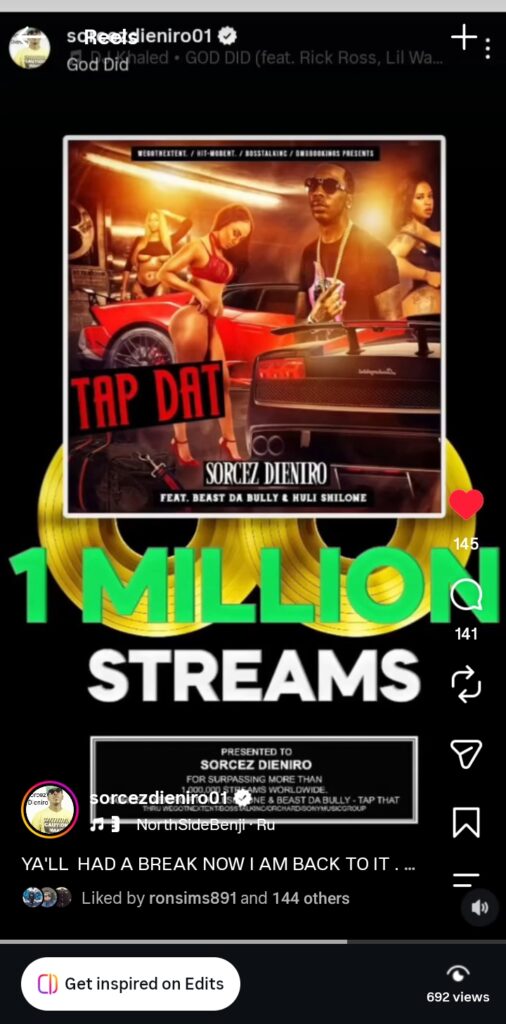
His audience is growing, with more than 468,000 Instagram followers and over 10 million streams across his music, reflecting the momentum surrounding his catalog and recent releases. His accomplishments also include a collection of music awards and recognition across various platforms and industry events.
Dieniro’s award-winning journey has included recognition connected to MTV and the YO ATL Raps Music Awards, where he reportedly earned more than four wins over the past two years. His continued recognition has also led to nominations for the iHeartRadio Music Award and the One Mic Award, further adding to the excitement surrounding his next chapter.
WILD CARD IS MAKING ITS MARK
At the center of his current musical journey is his debut solo album, Wild Card. Written, produced and arranged by Sorcez Dieniro, the project reflects his creativity, independence and experience as a multifaceted artist who understands the music from several perspectives.
The album’s success is already generating excitement, with three songs reportedly surpassing three million streams each. The achievement underscores his ability to connect with listeners while continuing to develop a sound and identity of his own.
With Wild Card, Dieniro is seizing the moment and demonstrating that his experience in the entertainment industry has not diminished his hunger for success. Instead, it has helped fuel his creative direction, ambition and determination to reach new audiences.
A FANBASE THAT KEEPS GROWING
One of the most notable aspects of Dieniro’s growing popularity is his fanbase, which reportedly consists of more than 60 percent women. His audience engagement and social media following reflect the interest surrounding his music, personality and artistic presence.
As the momentum continues, comparisons to some of the industry’s biggest entertainers are becoming part of the conversation among supporters. But Dieniro is carving out his own lane, bringing his history, talent, experience and distinctive approach to the forefront.
With plans for touring in 2027, fans are anticipating opportunities to see the artist perform live as his show potentially makes its way to cities across the country.
THE NEXT CHAPTER: 2026–2027
With new opportunities on the horizon, Sorcez Dieniro is positioning himself for another major chapter in his career. His project is executive produced by Sorcez Dieniro and Ameico Smith of WeGotNext Entertainment, with distribution through Virgin Music/Universal Music Group.
Business affairs leadership associated with the project includes Tobias Wilson, as the team continues working toward expanding the artist’s reach and positioning his music for broader audiences.
From early industry experiences connected to Wu-Tang Clan to acting, production, songwriting, award recognition and millions of streams, Sorcez Dieniro’s journey reflects persistence, evolution and ambition.
The next phase is already underway. With touring plans, continued musical releases and a growing audience, 2026 and 2027 are shaping up to be exciting years for the Baltimore artist.
THE NAME TO REMEMBER IS SORCEZ DIENIRO.
Follow him on Instagram: @SorcezDieniro01
He is up now, and the journey is far from over.
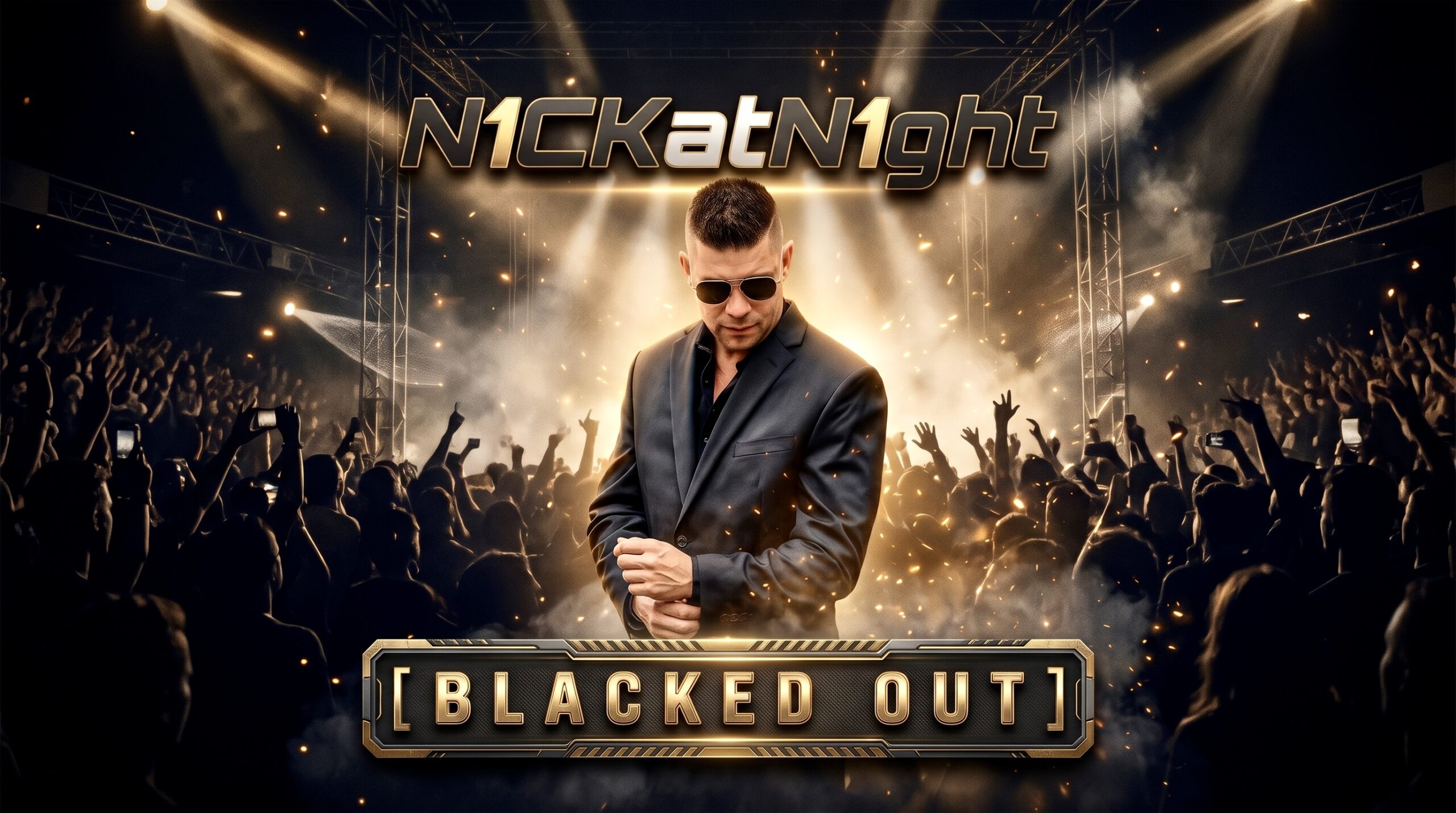
Detroit singer, songwriter, and producer Nick Caster has claimed the top spot on the international dance charts under his electronic moniker N1CKATN1GHT.
Marketed by Push Global Entertainment and Creativ Music Group, his Blacked Out EP peaked at No. 1 on the Top 100 Global Dance Album chart, alongside reaching No. 9 on the Top 100 UK Dance Album chart and No. 1 on the U.S. iTunes Dance Albums chart.
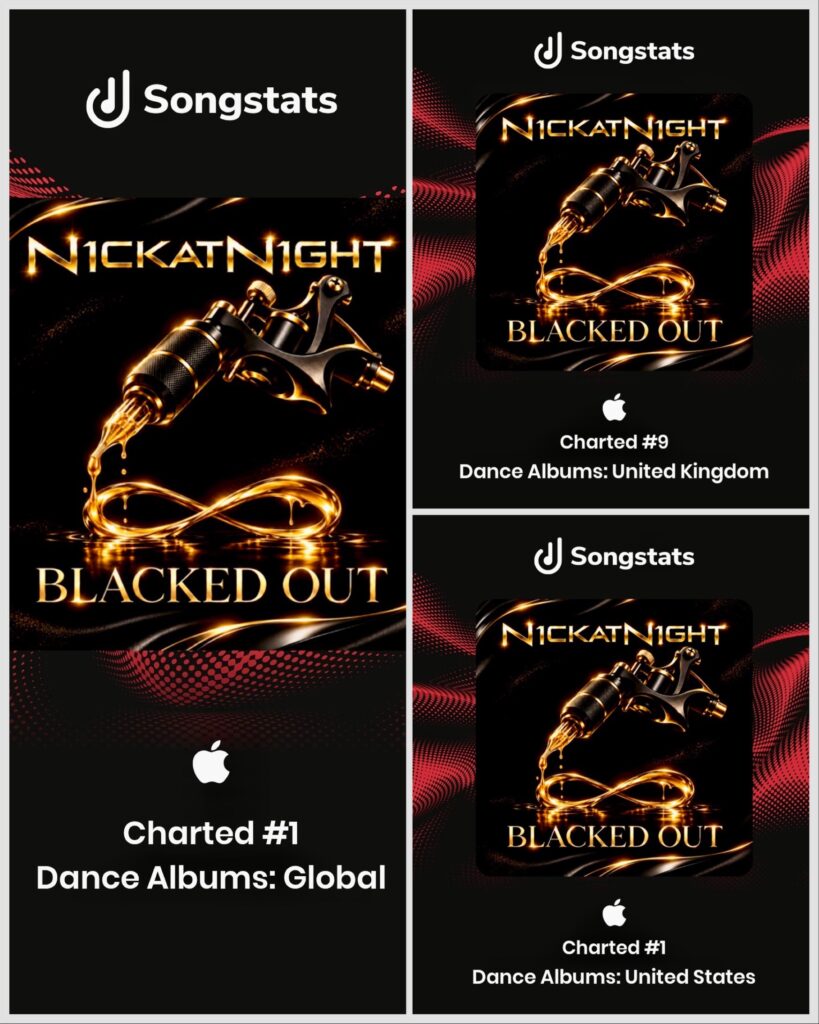
While the title Blacked Out might suggest escape, Nick approaches the project as a study in confrontation and endurance. He describes the visual concept behind the release as black ink veined with gold. The black ink represents the unseen burdens people carry, including loss, fear, regret, and difficult seasons survived. The gold symbolizes what remains: faith, strength, hope, and the resolve to keep moving forward.
“To me, ‘Blacked Out’ is about what happens when life leaves its mark and you choose to keep moving,” says Nick. “The darkness is real, but it isn’t the whole picture.”Released Nov. 20, the EP presents four distinct versions of the title track: the Radio Edit, GTA 6 Mix, Deep House version, and World Mix. Each arrangement offers a different entry point into the record, pairing dance floor energy with emotional release. Nick notes that rhythm can often communicate truths that words alone cannot, giving listeners space to dance, let go, and connect with the music whether it reminds them of a night they overcame, a future they are still fighting for, or simply the lift of the beat. From “Love Like Gold” to Blacked Out. When Leonard Magazine last profiled Nick Caster, he was leaning into his rock roots with “Love Like Gold,” a single examining the daily choices that sustain a relationship through turbulent times. That track reached No. 1 on Amazon’s Alternative Rock Best Sellers chart. On Blacked Out, the gold imagery shifts inward, focusing on the resilience a person can draw upon when questioning whether past struggles have already defined their future.
Faith remains central to Nick’s songwriting, linking Blacked Out to his recent inspirational single “You Were There” even as N1CKATN1GHT returns his focus to electronic dance music. For him, faith represents deliberate protection rather than invulnerability.
“Armor doesn’t mean you’re unbreakable,” Nick explains. “It means you’re protecting what matters and finding the courage to face another day. You can carry scars and still be open to love. You can remember where you’ve been without letting it choose where you’re going.”By pairing club momentum with an introspective message, Blacked Out continues to gain traction with listeners worldwide. As the artist sums up the project’s core message, “What you’ve survived may leave a mark, but it doesn’t get to write your ending. Keep moving. There’s still gold in you.”
Follow N1ckatN1ght:
Instagram | Facebook | Spotify
Follow Creativ Music Group:
Follow Push Global Entertainment:
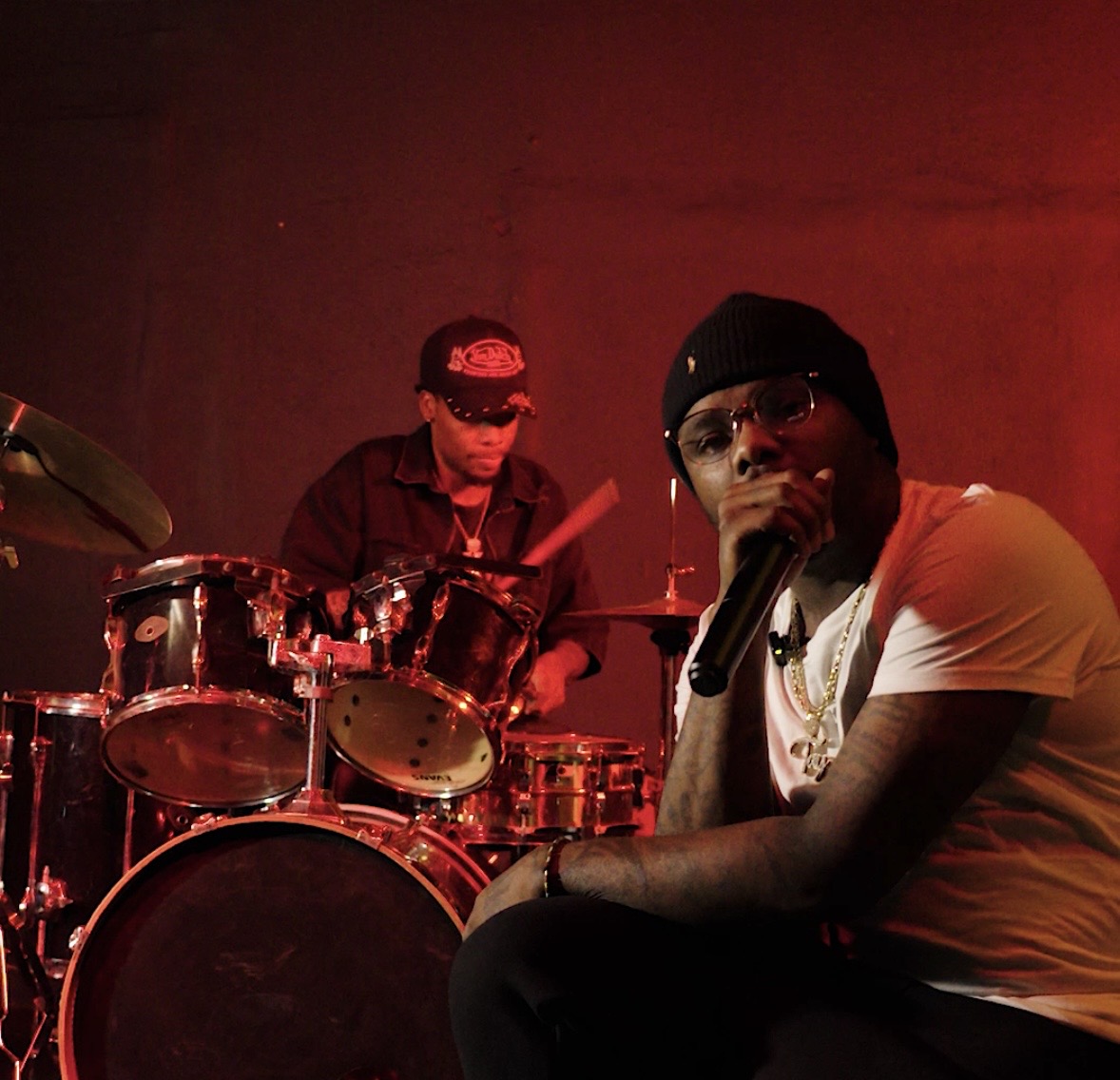
Orlando rapper Tonii Boii has spent years building a name on his own terms. Now, he’s joined by Rick Ross and Badazz Becky on “We Outside,” a new single that adds a major collaboration to a story Tonii Boii was already writing. Tonii Boii has connected with listeners through records like “UNC,” his work with the late Bigga Rankin, and the UNC Podcast. His independently built catalog has earned more than 50 million streams, giving him a foundation that goes beyond any one feature.
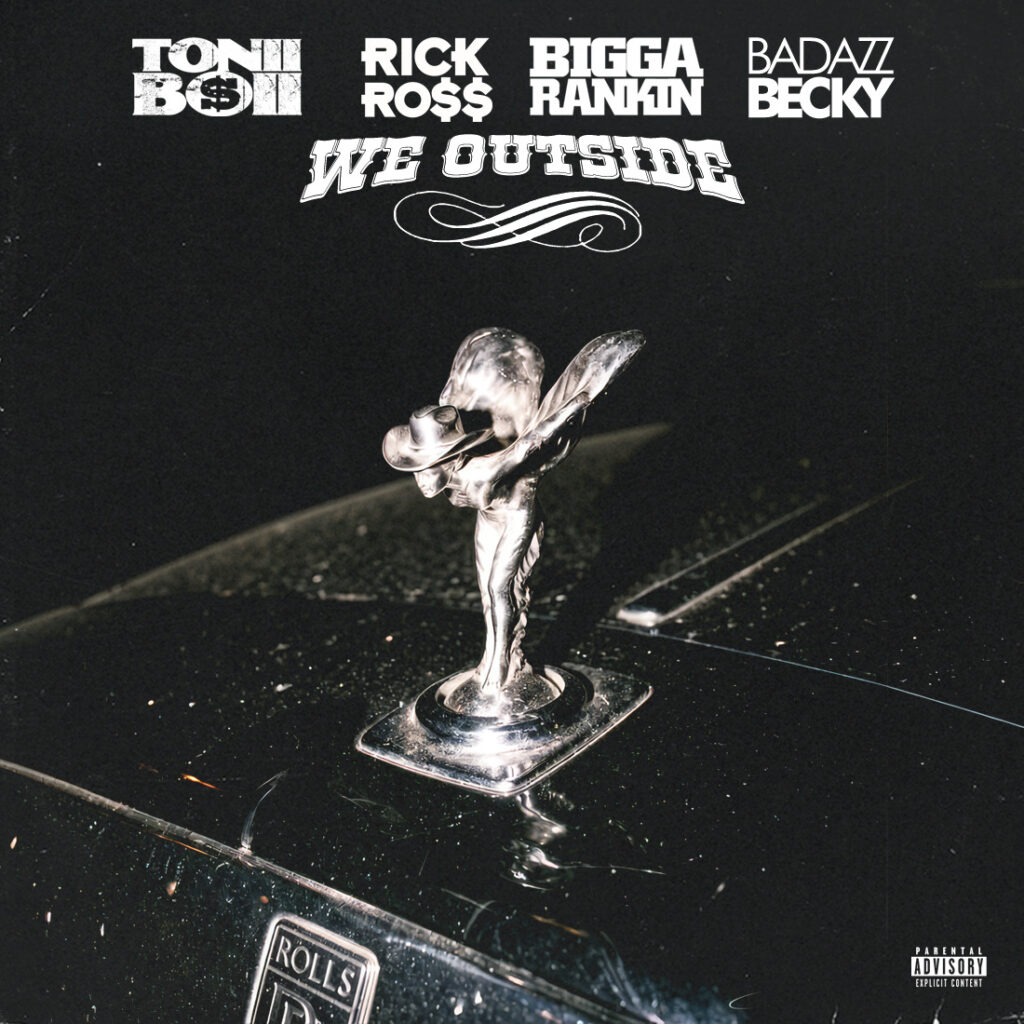
“We Outside” brings a different energy, Southern rap with country influenced touches, an upbeat hook and a call to celebrate life. The song also opens with one of Bigga Rankin’s final recorded intros. Bigga, Tonii Boii’s mentor and the project’s A&R, helped bring the collaboration with Ross together. Rick Ross appearance is a milestone, but “We Outside” keeps Tonii Boii at the center of the record, building on the sound and audience he has developed over time. “We Outside” is available now on all major streaming platforms.
Listen on Spotify
Watch “We Outside” visualizer

SORCEZ DIENIRO: The VETERAN, TRENDSETTER and Multi-Talented Artist Making His Next Major Move

Nick Caster’s N1CKATN1GHT Tops Global Dance Chart at No. 1 With Blacked Out EP

Tonii Boii Brings His Own Momentum to “We Outside” With Rick Ross

NALA, 23-YEAR-OLD MILLIONAIRE WHO LIVES BY PASSION

NOMADS are changing the landscape of the music business

Epilepsy Awareness Raised by Influencer Cruella Morgan
-
 Entertainment4 days ago
Nick Caster’s N1CKATN1GHT Tops Global Dance Chart at No. 1 With Blacked Out EP
-

 Entertainment4 days ago
Deadman Rashaun Scores International iTunes Chart Breakout With Album Deadman’s Hand
-
 Entertainment4 days ago
Tonii Boii Brings His Own Momentum to “We Outside” With Rick Ross
-
 Entertainment2 days ago
SORCEZ DIENIRO: The VETERAN, TRENDSETTER and Multi-Talented Artist Making His Next Major Move