
Entertainment
Interview with Serkan Aktaş: Exploring the Art of Filmmaking


Serkan Aktaş, born on December 4, 1989, in Istanbul, Turkey, is an award-winning filmmaker globally recognized for his contributions to the genres of fantasy and science fiction cinema. He holds degrees in Business Administration from Anadolu University and in Mathematics from Dokuz Eylül University. Aktas honed his filmmaking skills at the Istanbul Cinema Academy, where he graduated with distinction. He also earned a Master’s and a Doctorate in Film and Television from Beykent University. His notable works include films like The Librarian (2022), Mirrorty (2017), and Resurrection under the Ocean (2021), which have been acclaimed in film festivals around the world.
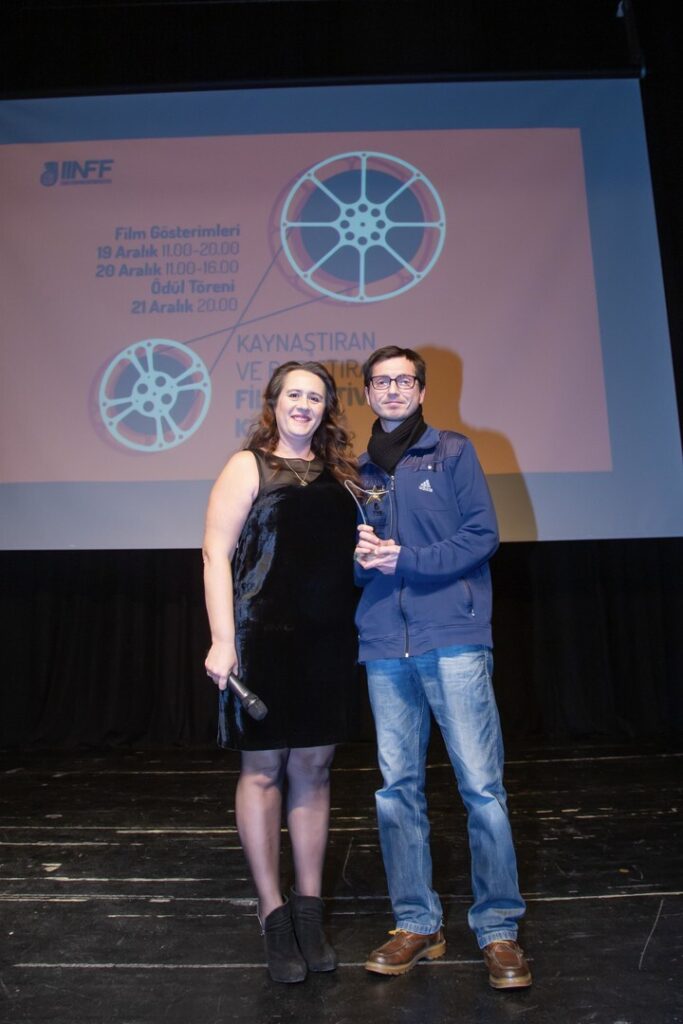
Q: Tell me about your filmmaking journey and what initially drew you to this career path?
Serkan Aktaş: My filmmaking journey began at the age of 16, when I had a life-changing experience watching Hokkabaz, a Turkish film, with my older brother. Until then, I had always been drawn to films, watching them on DVD or CD for hours. But watching Hokkabaz on the big screen opened my eyes to cinema in a completely new way. It was a revelation. I felt a deep, undeniable connection to the art form, and that night, I decided I would become a writer and director. It was a moment that set the course for everything that followed.
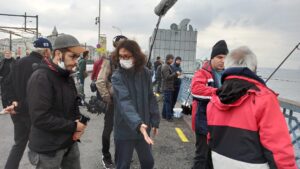
Though I initially pursued a more analytical path, earning degrees in Business Administration and Mathematics, my passion for filmmaking was never far behind. I sought to deepen my understanding and sharpen my creative instincts at the Istanbul Cinema Academy, where I graduated with distinction. Later, I went on to complete both a Master’s and a Doctorate in Film and Television from Beykent University. These academic experiences gave me the tools to transform my ideas into cinematic realities, but it was my insatiable curiosity and my belief that the best films are those that stand the test of time that truly shaped my journey.
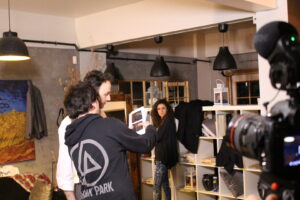
For me, the essence of filmmaking lies in the desire to evoke joy, wonder, and thought in the audience. As I continued to create, films like The Librarian (2022), Mirrorty (2017), and Resurrection under the Ocean (2021) became platforms for me to address real-world issues through the lens of fantasy and science fiction. Cinema, for me, is not just entertainment; it’s a way to challenge the status quo, to open minds, and to spark conversations.
I’ve always believed in the power of discipline in the creative process—reading, watching, and writing every day. This daily rhythm keeps me grounded and sharp, ensuring that I continue to push boundaries and explore new ideas. My goal has always been to share the same excitement and curiosity that cinema has given me, hoping that, through my work, others can experience the same sense of awe and wonder. Ultimately, filmmaking is a way for me to contribute to solving the world’s unsolved problems, whether through direct commentary or through the rich narratives that challenge audiences to think beyond the surface.
As the most awarded filmmaker in Turkey, I find the greatest reward in knowing that my films have an impact on people. Each time someone experiences my work, whether they feel inspired, moved, or challenged, I feel I’ve achieved my purpose. My journey is far from over, and I’m eager to continue exploring the infinite possibilities of fantasy and science fiction, always in pursuit of creating meaningful stories that make a difference.
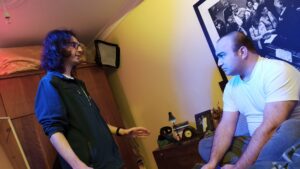
Q: What are a few films that have significantly influenced your creative style?
Serkan Aktaş: Several films have had a profound influence on my creative style, especially those that explore the limitless possibilities of fantasy and science fiction. These genres resonate deeply with me, as they offer a canvas where imagination and intellectual curiosity can roam free.

Serkan Director
Films like Being John Malkovich (1999) and Groundhog Day (1993) are especially impactful. They take simple, often surreal concepts and use them to explore profound existential questions. Being John Malkovich twists reality in a way that forces us to reconsider human existence and identity, while Groundhog Day uses the time loop to examine the potential for personal transformation. Both films exemplify how fantasy can serve as a gateway to engage with complex philosophical ideas while still offering entertainment and wonder. These films taught me the power of blending mind-bending ideas with compelling narratives, a practice I try to bring to my own work.
On the other hand, films like Dark City (1998) and Pitch Black (2000) represent the darker, more gritty side of science fiction, where human survival and the unknown are tested in environments that defy the laws of nature and reality. These films challenge the viewer’s understanding of the world and push the boundaries of what is possible in storytelling. Their exploration of existential and philosophical themes within a sci-fi framework deeply resonates with me, particularly in how they balance complex ideas with gripping, atmospheric worlds.
As a mathematician, I am drawn to the abstract nature of sci-fi and fantasy. Concepts like fractals—the Mandelbrot set, the Julia set, and the Sierpiński triangle—represent the beauty of infinite complexity emerging from simple principles. Similarly, these genres allow me to create intricate, boundless worlds. They satisfy my intellectual curiosity and provide a space where I can merge abstract mathematical ideas with rich, imaginative storytelling. These films have significantly shaped how I approach both the form and content of my work, encouraging me to think beyond the ordinary and craft stories that explore infinite possibilities.
Q: How do you approach collaborating with actors to achieve the best performance?
Serkan Aktaş: When it comes to collaborating with actors, I believe in building a strong, personal connection before stepping onto the set. I strive to be a friend—especially a best friend—to the actors I work with. I spend time with them outside of the rehearsal process, just hanging out and getting to know each other on a deeper level. This approach, which I learned from a book about Quentin Tarantino and his work on Pulp Fiction, has proven to be incredibly effective.
Q: Describe your process for developing a shot list and how you utilize storyboards to visualize scenes?
Serkan Aktaş: My process for developing a shot list is a bit unconventional, as I prefer photoshoots over traditional storyboarding. Before the set, my Director of Photography (D.O.P.), a few actors, and I work together on a photoshoot for every scene in the actual locations where we will be shooting, frame by frame. I find this approach to be more effective than storyboarding because it allows me to visualize every detail of the scene and ensures that I don’t miss anything in the script. After the photoshoot, I turn the images into a catalog or booklet, which serves as a practical guide for the shoot. This method makes it easier to follow the scenes and gives me a clear visual reference to work from. It also helps me feel more relaxed and confident before stepping onto the set, knowing that I’ve already visualized each moment in detail.
Q: How do you stay updated on new filmmaking technologies and incorporate them into your projects?
Serkan Aktaş: I stay updated on filmmaking technologies by researching industry trends, attending conferences, and connecting with other filmmakers. When incorporating new technologies into my projects, I focus on how they enhance the narrative and viewer experience. However, as an independent filmmaker, I face the challenge of limited budgets, which can make it difficult to incorporate expensive technologies. While I may not always have access to the latest tools, I try to use available resources creatively, finding ways to incorporate new techniques within the constraints of my budget. My focus is always on serving the story, and I look for cost-effective solutions that can still bring the desired impact.
Q: What is your approach to handling unexpected challenges that may arise during filming?
Serkan Aktaş: I believe that when unexpected challenges arise, the key is to come up with the problem and try to find a new way to solve it. Every problem has a solution. Stay calm, be patient, and think that you will find a way to solve it. A good example of this was during the production of The Librarian. It was my doctorate film project, and I had to complete it to finish my degree. However, the realities of filmmaking, especially in independent cinema, proved to be much more complicated than I had anticipated.
The biggest challenge was a tight budget, compounded by the pandemic. Many exterior scenes in the script were written before COVID-19, but due to health restrictions and local authorities’ refusal to grant permission for outdoor shoots, I was unable to film them as planned. To make matters more complicated, just 10 days before filming began, I had a significant disagreement with both the cast and crew. This led to the difficult decision of letting go of key members, which left me with very little time to rebuild the team and get the production back on track.
Despite all these obstacles, I remained determined not to give up. I decided that waiting for the pandemic to end could mean losing the entire project, so I chose to adopt a guerrilla filmmaking approach for the exterior scenes. With a small, dedicated team, we shot those scenes quickly, without formal permissions. While it was far from ideal, the feedback from both audiences and critics showed that those guerrilla-style shots ended up being some of the most impactful moments in the film.
This experience taught me that perseverance, patience, and adaptability are key in overcoming the unexpected challenges that arise during production. When things don’t go as planned, it’s important to stay calm, think creatively, and keep moving forward.
Q: If you were to direct this film, what are the key themes you would want to highlight?
Serkan Aktaş: If I were to direct this film, the key theme I would want to highlight is the importance of collaboration, particularly with the Director of Photography (D.O.P.) and the First Assistant Director (1st AD). These two roles are absolutely essential for bringing the story to life. While every element of a film and every person on set must be perfect, for me, the D.O.P. and 1st AD are like my left and right arms. They are crucial in shaping the vision and flow of the production.
I’ve noticed that many directors who are very successful tend to work with the same D.O.P. and 1st AD, because over time, they develop a mutual understanding and a strong sense of communication. They talk to each other, understand each other’s vision, and know how to work in harmony. This synergy allows the director to focus on the creative aspects of the film, knowing that these key team members will execute the logistics and visuals in alignment with the story. Collaboration is at the heart of filmmaking, and these two roles, for me, are at the core of that process.
Q: What unique elements would you bring to a project to make it stand out?
Serkan Aktaş: To make this project stand out, I would bring my unique perspective as both a mathematician and a filmmaker, blending analytical thinking with creative storytelling. I’ve always been drawn to the beauty of patterns and structures, especially in the realms of fantasy and science fiction, and I believe this allows me to approach storytelling in a way that others might not. By incorporating abstract concepts, like fractals or mathematical structures, into the narrative and visual style, I can create a film that feels fresh and intellectually stimulating.
In addition, my focus on creating timeless films, the kind that can be watched repeatedly with new layers of meaning revealed each time, would be another unique element. I aim to craft stories that engage both emotionally and intellectually, offering the audience more than just entertainment—they would walk away with something to reflect on. The emotional resonance and depth of the story, combined with visually innovative techniques, would help this project stand out in a crowded film landscape.
Lastly, I believe in the power of collaboration, and the strength of having a solid team that understands the vision. My approach to working closely with my D.O.P. and 1st AD, creating a synergy where we all work towards a common goal, would be essential in ensuring that this film is both a creative and technical success. It’s all about pushing boundaries, telling unique stories, and creating experiences that stay with the audience long after the credits roll.
Q: Can you tell us about your upcoming projects?
Serkan Aktaş: My next project is Kanlısırt – The Blood Ridge, a feature film that I’m both writing and directing. The script is already completed, and the story is set during the intense Battle of Gallipoli in World War I, focusing on the brutal confrontation between the Turkish and British forces at Blood Ridge (Kanlısırt). As Turkey’s most awarded filmmaker, I aim for this film to become the highest-grossing film in the country, targeting 13.5 million viewers. I believe that a filmmaker with such recognition should also aim to create the most widely watched film, and that’s exactly what I’m working towards with this project.
Social Media Contact Addresses
https://www.imdb.com/name/nm14575507/
https://www.linkedin.com/in/serkan-aktas-a12463260/
https://www.themoviedb.org/person/4089513-serkan-aktas
https://filmfreeway.com/SerkanAktas
https://letterboxd.com/director/serkan-aktas/

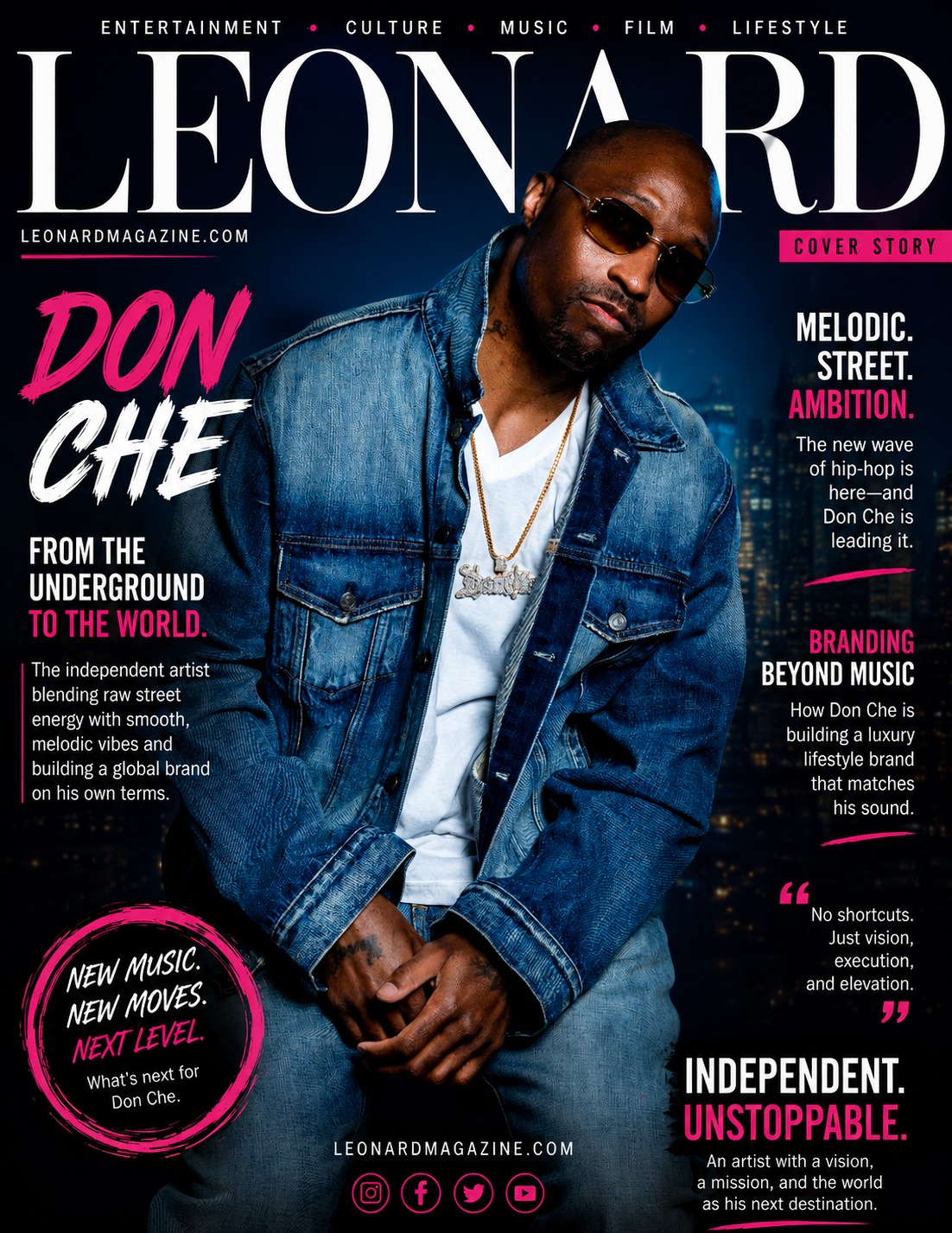
The modern music industry has opened the door for independent artists to compete on a global stage, and Don Che is proving that success no longer depends on a major label. Through consistent releases, a recognizable brand, and a clear artistic vision, the rising rapper is steadily building a career that extends far beyond music. Don Che’s sound blends melodic rap with street-inspired influences, creating records that balance smooth production, confident lyricism, and relatable storytelling. His music reflects the mindset of someone committed to growth, touching on themes of ambition, resilience, success, and self-belief. Rather than chasing temporary trends, he has focused on developing a style that feels authentic while remaining commercially appealing.
What makes Don Che stand out is his understanding that today’s artists are brands as much as they are musicians. Every visual, promotional campaign, and release contributes to a polished identity built around luxury, confidence, and consistency. His approach demonstrates an entrepreneurial mindset, allowing his audience to connect with a lifestyle as well as the music itself. That strategy has helped Don Che earn recognition from respected media outlets. NY Weekly recently highlighted his vision of bringing together music, fashion, and purpose into one cohesive creative brand, reinforcing his reputation as an artist with long-term goals rather than short-term ambitions.
His reach continues to expand internationally. Don Che’s collaboration on “BIGGETY” introduced his work to audiences in the Bahamas, where the project received coverage from Bahamas Local and was also featured on Nassau Tonight News. These opportunities reflect his growing presence outside his home market and his commitment to connecting with listeners across different regions. Adding to his momentum is Tha Sauce Vol. 2, a project that showcases his evolving artistry through polished production, memorable melodies, and confident performances. The EP reflects the qualities that have become synonymous with Don Che’s music—authenticity, determination, and a relentless drive to elevate his craft.
As the independent music landscape continues to evolve, artists who combine talent with strategic branding are finding new opportunities to thrive. Don Che represents this new generation of creators, building his career independently while expanding his influence through music, visuals, and business-minded creativity. With each release, Don Che continues to strengthen his foundation, proving that consistency and vision can create lasting impact. As his audience grows and new opportunities emerge around the world, he remains focused on building a legacy that extends beyond streaming numbers—one rooted in creativity, entrepreneurship, and authentic artistic expression.
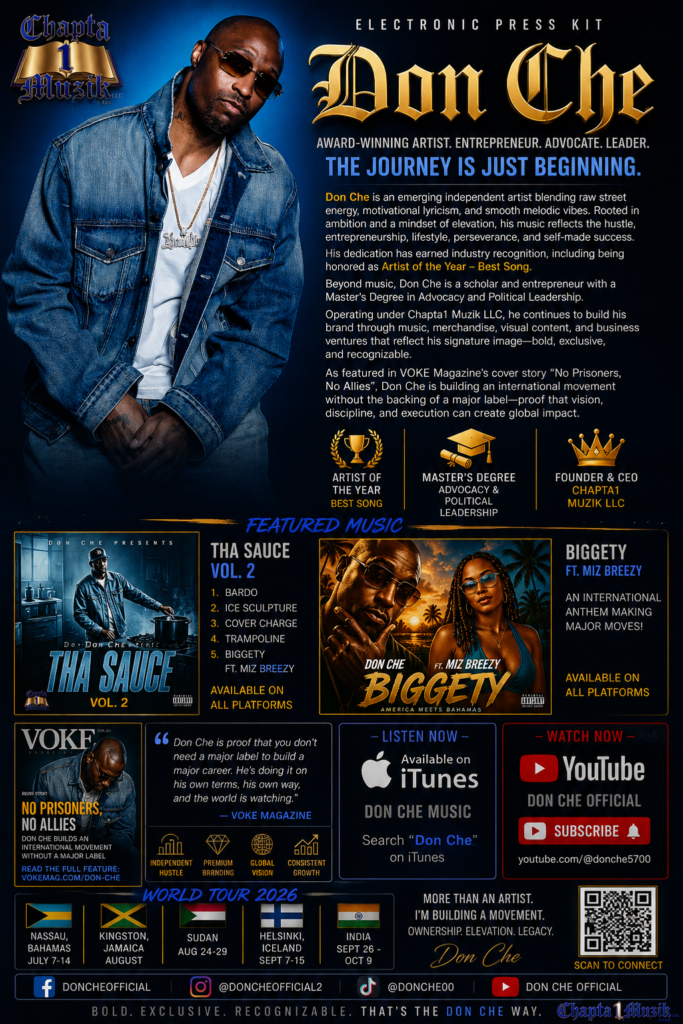
Biggety is doing 30k monthly streams since it’s release! Making it a hit for the Independent artist. Independent Artist milestone without Radio Airplay.
Bahamas Local – “BIGGETY” International Music Video
https://www.bahamaslocal.com/
Nassau Tonight News Coverage
https://youtu.be/ojJSo6q8NLE?
Stream Tha Sauce Vol. 2 on Spotify
https://open.spotify.com/
As Don Che continues expanding his catalog and strengthening his international presence, he remains one of the independent artists to watch, demonstrating that determination, creativity, and a clear vision can build a lasting career in today’s music industry.


At only 21 years old, independent R&B and soul artist Daisy Close is building a career defined by authenticity rather than trends. Through heartfelt songwriting and emotionally driven performances, she has emerged as a voice for listeners navigating mental health struggles, self-discovery, and personal growth.Rather than creating music solely for entertainment, Daisy approaches every song as a reflection of real-life experiences.
Her lyrics explore vulnerability, resilience, heartbreak, healing, and the importance of embracing one’s emotions. By sharing her own journey openly, she hopes to remind others that they are never alone in what they are feeling. One of the defining themes throughout Daisy’s work is self-worth. She believes that learning to value yourself is one of life’s most important lessons, and that message echoes throughout her growing catalog of music. Instead of hiding difficult emotions, she encourages listeners to acknowledge them, process them, and ultimately transform pain into strength.Mental health advocacy has also become a central part of Daisy’s mission as an artist. She has consistently emphasized the importance of breaking the stigma surrounding conversations about anxiety, depression, and emotional well-being.
Through both her music and public interviews, she encourages people to seek support, speak openly, and recognize that vulnerability is not a weakness but a sign of courage. As an independent artist, Daisy continues to prove that meaningful storytelling can resonate just as strongly as commercial success. Her commitment to writing honest, deeply personal songs has earned her a loyal audience that connects with the authenticity behind every release. Looking ahead, Daisy Close remains focused on creating music that not only showcases her artistic growth but also provides comfort and hope to those facing their own personal challenges. With each new project, she continues to establish herself as a rising voice in contemporary R&B—one dedicated to inspiring healing, confidence, and emotional connection through the power of music.
As her career continues to grow, Daisy Close demonstrates that music can be much more than entertainment—it can become a source of understanding, encouragement, and healing for people around the world.
As an independent artist, Daisy Close represents the growing movement of musicians who prioritize authenticity over industry expectations. Her dedication to creating deeply personal music proves that emotional storytelling can create a lasting impact beyond commercial success. Her growing catalog reflects an artist who is not afraid to be honest, explore difficult emotions, and create songs that speak directly to the human experience. This genuine approach has allowed her to develop a loyal fan base that values the sincerity behind every release. Looking ahead, Daisy Close remains committed to creating music that continues to inspire, comfort, and connect with audiences around the world. With every new project, she continues to develop her sound while staying true to the emotional honesty that defines her artistry.
As a rising figure in contemporary R&B and soul, Daisy Close represents a new generation of artists who believe music can do more than entertain—it can heal, encourage, and bring people together.
Her journey is a reminder that the most powerful songs often come from real experiences, and through her voice, Daisy Close continues to prove that authenticity, compassion, and emotional connection can create a lasting impact in the world of music.
Billboard Top Hip-hop
“Pulling Strings from the Bing” Ignites Buzz on YouTube With a Gripping Story,…and an Even More Powerful Reality
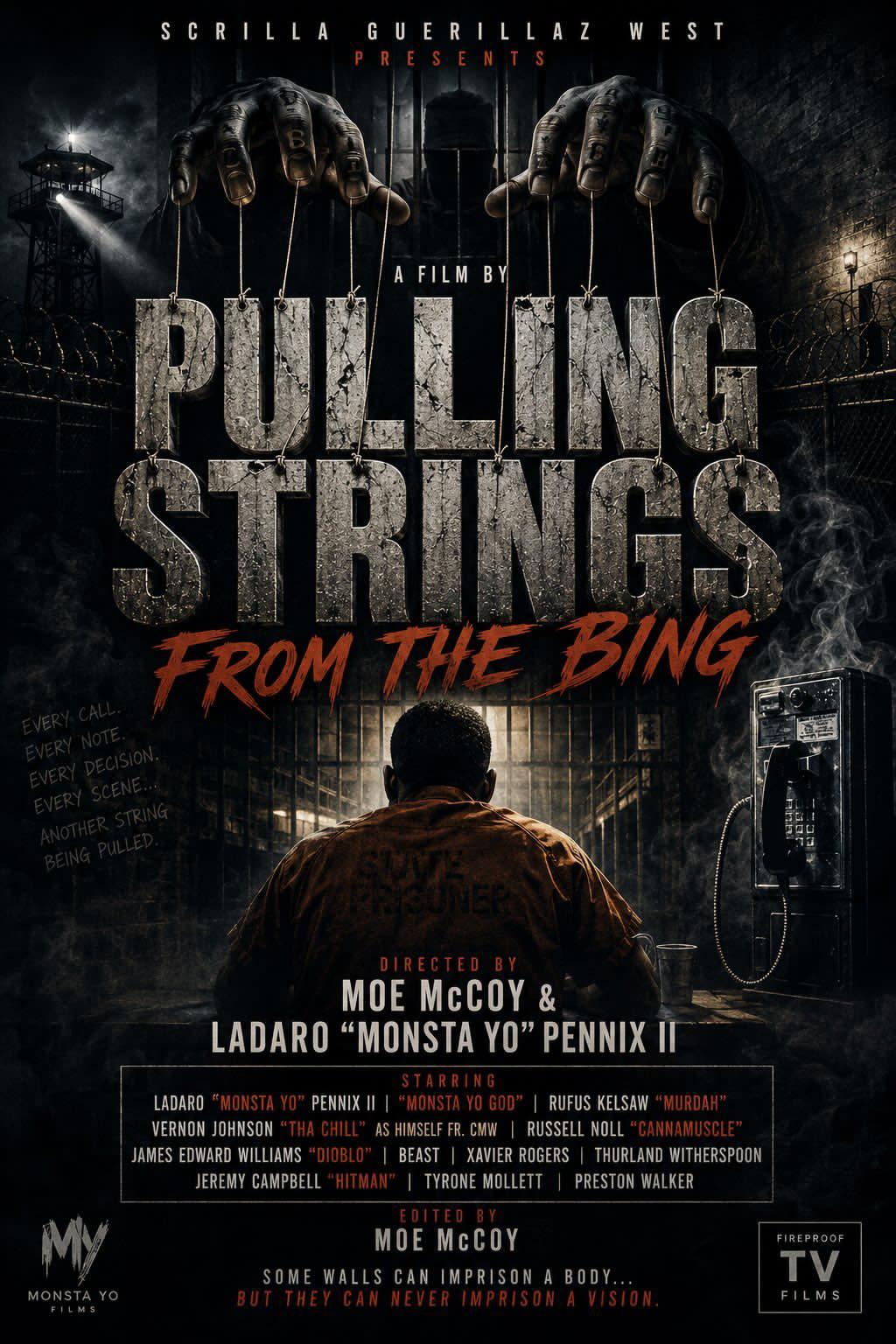
Independent filmmaking continues to prove that powerful stories don’t need Hollywood budgets to make a lasting impact. One of the latest projects generating excitement on YouTube is Pulling Strings from the Bing, a suspense-filled short film directed by Moe McCoy and Ladaro “Monsta Yo” Pennix II. With its compelling storyline, authentic performances, and emotional depth, the film is quickly capturing the attention of audiences who appreciate meaningful urban cinema.
Presented by Scrilla Guerillaz West in association with Hood Fades, Hood Smoker Podcast, and Fireproof A.I. TV & Films, Pulling Strings from the Bing is far more than a traditional crime drama. It is a powerful story about loyalty, ambition, betrayal, redemption, and the pursuit of a legacy that can outlive a lifetime.
At the heart of the film is Monsta Yo God, one of America’s most feared and respected street kingpins. Although serving a life sentence behind prison walls, his influence stretches far beyond the prison gates, with major decisions still flowing through him. His name commands respect from allies and fear from enemies, making him a force whose presence is felt even from behind bars.
But years of reflection begin to change his perspective.
Monsta Yo God realizes that real power isn’t measured by fear or financial success, but by the positive impact a person leaves behind. Determined to transform his empire into legitimate opportunities for future generations, he sets out on a mission to build something greater than himself.
Not everyone shares that vision.

As his plans begin to unfold, buried secrets surface, loyalties are questioned, greed takes hold, and betrayal emerges from within the very circle he once trusted. Every conversation carries weight, every alliance is tested, and every move could be someone’s last. The suspense builds with every scene, keeping viewers guessing until the very end. Adding even greater emotional impact is a powerful soundtrack featuring music from legendary West Coast recording artist Monsta Yo, whose independent career has inspired countless artists while helping redefine what can be accomplished outside the major-label system.
His music becomes the heartbeat of the film, adding intensity, emotion, and authenticity to every pivotal moment. Yet what truly makes Pulling Strings from the Bing extraordinary isn’t just the story on screen, it’s the remarkable story behind its creation.
In a powerful reflection of the film itself, co-director Ladaro “Monsta Yo” Pennix II filmed and helped create this project while still serving his prison sentence. Refusing to allow incarceration to define his future, Monsta Yo has continued building businesses, writing books, producing music, directing films, and collaborating with talented creatives on the outside to bring his vision to life.
That reality gives Pulling Strings from the Bing a level of authenticity that cannot be replicated. It stands as living proof that purpose has no prison walls, creativity cannot be incarcerated, and determination can overcome even the most difficult circumstances.
The partnership between Moe McCoy and Ladaro “Monsta Yo” Pennix II demonstrates the extraordinary possibilities that emerge when talent, vision, and perseverance come together. Together, they have created a film that not only entertains but inspires showcasing the strength of independent filmmaking and the limitless power of refusing to give up on a dream.As the buzz surrounding Pulling Strings from the Bing continues to grow across YouTube and social media, the film is rapidly becoming a must-watch for fans of suspense, independent cinema, and authentic urban storytelling. Rather than giving away its biggest surprises, it invites audiences to experience every twist, every betrayal, and every unforgettable moment for themselves.
Sometimes the greatest story isn’t the one unfolding on the screen, it’s the true story of the people who refused to let their circumstances stop them from creating it.



Dr. Meleeka Clary Expands Global Media Platform to Champion Mental Wellness, Authentic Storytelling, and Social Awareness

From Multi-Million Dollar Real Estate Development to Online Education: How Durr Capital Group Is Opening the Door for the Next Generation of Investors

Dr. Ko-Cheng Fang Founder, Chairman & CEO of LongServing Technology

NALA, 23-YEAR-OLD MILLIONAIRE WHO LIVES BY PASSION

NOMADS are changing the landscape of the music business
